Showing posts with label Risk Type Compass. Show all posts

Monday, 13 July 2020

AlphaMind Podcast Episode 49 - The Risk Personality Episode (Plus Take a Free Risk Personality Test).

Geoff Trickey, one of the world’s leading experts on Risk Personality, says that ‘personality writes your biography’. He believes that knowing and understanding your risk personality can provide an enormous edge in how you work and the quality of the decisions and choices you make in your work.

Geoff and his team created a new tool for assessing risk personality called 'The Risk Type Compass'.
This tool helps people better understand and make sense of their Risk Personality. Knowing and understanding your risk personality and factoring it how you work can provide a vital edge in your trading. I discuss this more expansively here in an article I published on LinkedIn (view here). 


Podcast Episode Links:
🎧‬Buzzsprout
🎧Main Link
🎧‬iTunes
🎧‬Spotify

The Risk Type Compass (take the test free)

Psychological Consultancy have very kindly offered to allow listeners of the AlphaMind Podcast the opportunity to take the test for free and receive a complementary shorted version of the test report. They can upgrade to receive a longer 10-12 page report of their test for a GBP 35 fee.

The test takes about 10 minutes to complete, after a short registration process. – It is best to take the test in your first language, as this helps with the nuance on some of the questions.

The link for the test is here www.psy-key.com/Default?AccessCode=ALPHAR3


The Risk Type Compass Diagram. 


"What is most important is being self-aware enough to recognise your Risk-Type, being comfortable being that Risk-Type, and adopting a style and approach that is complementary to your Risk-Type". 

Some key features of the Risk Type Compass.

As you can see from the diagram above, there are 8 different Risk Types. Each type shares traits with its neighbouring types and could be described loosely as a blend of each of its neighbouring types. The opposite type to each person, would be the type which is 180 degrees across the compass. 

The closer one is to the centre, the milder one is generally in their risk type, the closer to the edge of the compass the stronger they are in displaying the traits of that risk type, and the less flexible they are in relation to that risk type.

We have found that people can succeed wherever they are on The Risk Type Compass. Of the many traders and investors who have taken the test with us, many from leading hedge funds and investment banks, there is not a space on the entire compass where success is more likely. But what we have found does matter, is the degree of self-awareness people have with regard to their risk type, their degree of comfort being that risk-type, and their adoption of  a style and approach to their work, that is complementary to their Risk-Type. 

One of the key points to consider, is that risk personality is fixed. If you took the test 10 years ago, and take the test 10 years from now, there is unlikely to be any significant change in position on the Risk Type Compass. That is why Geoff Trickey says, 'personality writes your biography'.

The Risk Type Compass is used by people and businesses from across the spectrum to understand risk personalities of people in key decision-making roles. Leaders and managers, military personnel, people involved in security professions such as the police, aviation and travel, medicine, sport and any profession or job where the ability to make good decisions in uncertain situations is vital. We just happen to use it for trading and investment. 

We have found are that the closer one is to the top of the Risk Type Compass, generally the more we find one is challenged by uncertainty. By contrast, the closer one is to the lower half, the more tolerant one tends to be of uncertainty. Do not confuse this necessarily through with risk aversion. We sometimes find that people towards the top can be highly risk tolerant when they are working congruently to their risk personality, and towards the lower half, can be highly risk averse, when not working congruently to risk personality.

We also found that towards the left-hand side of the compass people are increasingly comfortable relying on intuition and gut feel. Though logic is still a big part of their process, but they generally need less data points or evidence to make a choice. Towards the right side of the compass we find that people prefer to have more evidence, and whilst they are capable of making intuitive decisions, they seem prefer a high degree of evidence and data to support their choices. 


Trading Context Description of Each Risk Type:
The Wary type is generally shrewd, vigilant, controlling. In trading and investment situations, ‘less is more’ is usually part of their doctrine. They tend to be defensive, planned, and strong on risk-management. They are very ‘detective’ like, they love the puzzle of the markets. This passion for the puzzle means they will dig through lots of information to find insights and clues as to where markets are heading. These types of traders tend to avoid volatility, and have a strong dislike to uncertainty. As such they may will normally chase highly asymmetric risks, and can produce high risk-adjusted returns, however this can be tempered by being relatively low utilisers of risk capital. Steeping back from the detail and seeing the big picture is often one of their growing edges. 

The Prudent type is generally systematic, orthodox, detailed. In trading and investment situations we see them being very methodical. They tend to be good system builders, though not necessarily creative. Given a plan, they like to stick to it. They like the emotion stripped out the decision-making process as much as possible. They do not mind large risks, but struggle with volatility, for that reasons they may often prefer spread/relative value approaches which use high levels of capital for relatively low returns. This type likes a lot on data points before acting, and will thus be late into a move, but are usually very strong on risk management. A tendency to not seek perfection before engaging in risk is often one of their typical growing edges.

The Deliberate type is generally analytical, investigative, business-like. In trading and investment situations think ‘air-traffic controllers’. They are very focused, not easily distracted, follow rules and established practices. In volatile dynamic situations they are likely to remain calm, calculated and not easily flustered. They tend to like a lot of evidence before acting, which means they may be late into trades, but when they do enter, they have done their homework. On the other hand, they can be slow to change or react to new situations, which can have consequences on the other side. Being more willing to trust their instincts and not have all the boxes ticked in terms of risk is one of their typical growing edges.

The Composed type is generally calm, resilient, optimistic. They are strangers to anxiety and often dispassionate in their decision making, thus they deal well with stress and volatility. They can be confident and can stand back well from the noise and fray without being influenced by it. On the other hand, they are not always sensitive to the detail and sometimes can be too optimistic for a given situation or lacking sensitivity to small but important changes and signals. We often find them running large portfolios of products, option portfolios or portfolio or exotic/complex products in low liquidity markets and situations where the ability to stay their hand during periods of volatility is advantageous.  Being more sensitive to nuance and pairing back optimism to more realistic levels would be amongst their typical growing edges.

The Adventurous type is generally intrepid, enterprising, undaunted. Not surprisingly this type is the type most likely to be described as entrepreneurial. The Adventurous type are often big-picture thinkers, who often see the whole matrix, but may risk missing some of the detail within it. They tend to be confident, they like the excitement of markets and tend to see opportunity where others see fear. However, they may dislike being boundaried or rule bound, particularly when it comes to risk-taking, which can be their un-doing. This type can keep many plates spinning at once, which makes them good at long-term trading, and holding multiple positions and large portfolios. Becoming more detail orientated around risk is one of their typical growing edges, as can be paring back some of their optimism to more realistic levels. 

The Carefree type is generally audacious, curious, unconventional. This type is often creative and drawn toward novelty. Their daringness can make them a stranger to worry or concern, and they will try things others are not willing to. We often see them being the first into a new move or trend. However, the risk is they may be in too early, or it may not be a new trend, merely a correction. Also, their lack of structure may mean their risk management is weak when they are wrong. This type may be great designers of systems and process but may sometimes lack the rigid planning and structure needed to operate within them. Adapting to more structured approach to matters around risk management is 
one of their typical growing edges. 

The Excitable type is generally enthusiastic, anxious, committed. We see them attracted to the excitement and buzz of the market. This can make them highly enthusiastic and intuitive. They are excited by ideas and opportunities however being sensitive to risk and setbacks they tend not to get carried away by this. We tend to see this type thrive in highly liquid fast markets, but struggle when there is a lack of activity or direction. They are highly responsive to new news, and may make outstanding event type traders, however they may lose their advantage when running longer-term risk. Adapting to a more structured approach, and becoming more disciplined, is one of their typical growing edges. 

The Intense type is generally apprehensive, risk aware, passionate. This type is highly enthusiastic and committed to whatever they are doing but are also highly alert to setbacks and the fear of things going wrong.which can make them prone to bouts of self-doubt. This type is outstanding at seeing and feelings patterns in the markets that others are not. When they fully leverage these capabilities, they can produce excellent risk reward opportunities. However, these same abilities are often of little value to longer-term risk, and tends to suit a highly tactical approach, rather than a strategic approach. Developing self-trust and letting go of the need for approval from the market, as a proxy for others, is one of their typical growing edges. 

The Axial Zone on the Risk Type Compass represents a neutral zone where people do not show a strong attachment to any type of risk personality. They are generally flexible and more adaptive to risk approaches, seeing the benefits and flaws in all approaches. They seem to have less attachment to particularly views or methods, this can be highly valuable as they flex to market changes quicker than other risk-types. They also have the ability to hold multiple styles. Their balanced less nuanced attitudes can be highly useful; however, they may lack some of the edges which are characteristic of people of more extreme in each type. Being more decisive
is one of their typical growing edges. 

Podcast Episode Links:
🎧‬Buzzsprout
🎧Main Link
🎧‬iTunes
🎧‬Spotify

You can find out more about the Risk Type Compass at the Psychological Consultancy website here.

The AlphaMind Podcast

The AlphaMind podcast is co-hosted by Steven Goldstein and Mark Randall, market veterans with over seven decades between them in the financial markets. The podcast delves into the lives and stories of extraordinary guests whose experiences provide a fresh and powerful lens through which to understand the mental, emotional, psychological and behavioural challenges people face when encountering risk and uncertainty in financial markets. To find out more visit the AlphaMind podcast website. The AlphaMind Podcast is produced in partnership with 'The Society of Technical Analysts'.


The AlphaMind Trader Performance Coaching Programme
Our powerful Trader Performance Coaching Programme focuses on helping people develop and improve the key risk skills, abilities and mindsets which contribute to trading performance mastery. 

This programme makes use of our unique and powerful ‘Human Alpha Performance Model’ which helps illuminate the human aspects of the risk process as people navigate their way through the Financial Markets. The model helps people make sense of their behaviours when taking and managing risk in the financial markets, whilst the coaching helps people to make key changes and adjustments which drives growth in risk capability and personal performance.

This programme has been delivered over the past 10 years to people at many of the world’s leading trading and investment firms.

Click here to find our more about the programme, or email info@alpharcubed.com.

AlphaMind partner with AlphaRCubed to deliver the Coaching Programme. - AlphaRCubed provide a suite of Training, Development and Coaching programmes aimed at Trading and Investment businesses. View their flip brochure here to find out more about their work.  

The AlphaMind Project and Newsletter

The AlphaMind project is a collaboration between AlphaRCubed Ltd and the Mark Randall Consultancy. Its aim is to explore, understand, educate and inform about the key factors which lead to successful trading and investment performance at the human level.

We will shortly be publishing a regular Newsletter. If you would like to add your name to the Newsletter subscription list, then just sign up at this Newsletter link.

Tuesday, 2 August 2016

How 'Risk Personality' Influences Trading and Investment Performance


Imagine an aspiring sprinter who is physically tall, slim and wiry. The sprinter trains and practices hard, and develops the skills required for sprinting success, however he was one major disadvantage, his body type is not ideal for sprinting. In athletics, having the appropriate physique provides a clear edge.

In financial markets, the equivalent to athletics physique, is ‘Risk Personality’; characteristic patterns of thinking, feeling and behaviour when taking and managing risk and dealing with uncertainty. 

In the same way that athletes are physically different, so people possess different risk personalities which can provide an edge in their trading.

Risk Personality
The above FT headline was from an FT article. It related to research carried out by a group of senior academics which highlighted the degree to which personality affected ‘Risk Taking’ performance of senior bankers.

One of the starkest findings from this research paper, was that “Style”, a category which included personality, talent and work ethic, accounted for as much as 72% of the difference in banker’s risk behaviour. By comparison, aspects traditionally considered relevant, such as remuneration, accounted for only 4%, and education and age accounted for just 5% of the differences.
Understanding personality can help shine a powerful light on your behaviour and help uncover marginal edges which could help you re-calibrate how you trade.

Personality Testing can also be a powerful aid to firms looking to help improve and match employees, recruits and potential hires. It can also be used to help improve team performance, and support teams and businesses to improve how they work and function, when used with development and growth initiatives.
Different Risk Personalities. 

Myself and two colleagues carried out some private research where we analysed the Risk Personalities (Risk Type) of a wide population of individuals engaged in financial risk taking roles. This includes Traders, Portfolio Managers and Investment Managers at a number of investment banks, energy trading firms, fund management firms, and hedge funds.


We analysed over 100 individuals using a 'Risk Profiling' tool called the ‘Risk Type Compass’. This tool focuses objectively on people's risk-taking behaviours.

The Risk Type Compass is a psychometric tool developed by 'Psychological Consultancy Ltd'. It is built upon decades of research into human personality and risk behaviour, and categorises people into different risk personality groups, known as ‘Risk Types’.

The graphic below shows the Risk Type Compass, with the 8 different risk types. Each individual falls into one of the Risk Types, plus a neutral 'axial' grouping in the middle. 

Each 'Risk Type' reflects different characteristics which influence how a person is likely to behave, think and act when faced with high risk situations. 

The next graphic highlights the full distribution of successful traders in the population tested. We eliminated traders with less than 5 years’ experience from the group, to ensure we focused only on those who we felt had proved an ability to sustain their success. This left 78 risk-takers with experience ranging from 5 to nearly 50 years. 


Developing an ‘Edge’ for greater success 

I will return to the research shortly, but first it is important to understand the concept of 'edge' in trading. Developing an 'edge’ takes skill, hard-work, persistence, and other numerous factors. However, the value of this is slightly diminished if the individual is not working in a way which is congruent to their risk personality (Risk Type). 

An example of this occurred with an FX options trader I coached at an investment bank. This individual had been doing the job for about 10 years, however he was rarely achieving the levels of performance his potential suggested he could. This individual' Risk Type was ‘composed’, which meant he was calm, self-assured and rarely flustered in the face of uncertainty. However his trading approach seemed consistent with that we typically witness from traders on the other side of the compass, the ‘Excitable, Intense, and Wary’ types. 

When I explored this, it became clear that his learning experiences in his formative years were with people of the ‘Excitable, Intense, and Wary’ types. These types tend to do well in typical Spot FX type roles. And indeed his early years were as on the Spot FX desk. 

These people's influences and the requirements of the role had shaped his behaviours and approach. However FX options trading is a very different job, with different requirements and skills needed. 

The Risk Type Compass assessment, together with the coaching programme, helped raise awareness of this for the individual and helped highlight how his personality type was actually far better suited to an options trading role than a pure Spot FX trading role. 

Discovering this had a profound effect on the individual, he suddenly felt far more at ease in this role, and soon, together with the coaching, he started to modify his approach to a style more congruent to the needs of the role.  

Over the next few months his performance started to improve, and eventually it took-off in a way he had previously never experienced. He described it as like having the shackles removed. 

We have many similar examples of this effect over the years. It is not the approach per se that is incorrect, but an approach that was incompatible to a person's ‘Risk Type’. 

I feel that too often people are mentored, learn from, or are influenced, by ‘generic’ or ‘inappropriate’ trading approaches which handicaps and hinders their development and ultimately undermines their chances of success. As a result time, energy and resources are misallocated, individuals are held back from reaching their potential, and organisations suffers due to the sub-optimality connected to this. 

The Risk Type Compass and Risk Style 

Returning to the research: In trading and investment, there are certain types of risk-taking and risk management styles suited to certain Risk Types. 

This graphic below shows discretionary risk-takers only (We have removed market-makers from the analysis). In this graphic we have colour coded risk-takers into three discrete groups: 


1) ‘Directional’ in their approach. 

2) ‘Portfolio’ or ‘Relative Value’ in approach. 

3) ‘Optionality’ or similar volatility type  Risk-takers.


There are clear distinctions between the areas of the graphic being populated by the different types of approach. These areas are highlighted on the smaller graphics below:

Directional Risk-Takers show a clear bias towards the centre and left of the compass. The left side of the compass tends to be populated by risk-takers who are influenced by emotional/intuitive aspects relative to an more rational/evidence based approach. 

Individuals who have a preference for ‘directional’ trading are able to use the emotions of the markets to ‘feel’ the market. They have an edge by using their intuition and trusting their sensing abilities to cut through the noise. They seem particularly adept at finding value by reacting to market dislocations and opportunities, and seem to sense where markets are over-stretched or likely to extend the current move.

Not highlighted in these graphics, but relevant to this discussion: Individuals placed towards the top of the compass display more ‘risk-averse’ behaviours, whilst individuals towards the lower side of the compass tended to display greater levels of ‘risk-tolerance’. We see this manifest itself in risk-takers towards the topside tending to be more tactical, using price action to identify value and typically holding risk for shorter periods. Whilst risk-takers towards the lower side tend to be more strategic with a clearer ‘big-picture’ bias. They typically place more emphasis on ‘macro / fundamental’ drivers of value, and tend to ride market volatility whilst holding risk for longer periods. 

‘Portfolio’ or ‘Relative Value’ risk-takers have a clear bias towards the right side of the Risk Type Compass. The right side tends to be populated by risk-takers that have a preference for using logic and rational/evidence-based approaches to finding value and managing risk. They prefer to adopt approaches which remove some of the emotional influences from their decision-making. They also have a preference for using a modelling and systematic approaches to identify value as a way of cutting through the noise and filtering out the emotion.  

Options and volatility based risk-takers are predominantly distributed towards the lower right-hand side of the compass, with a couple of notable exceptions. 

Managing an options portfolio, with its many additional ‘moving-parts’ and constant high exposure to risk, seems best suited to a hedged/portfolio approach where risk can be warehoused, and value extracted from active management of the warehoused portfolio. 

Given the complexity of these products and the high levels of volatility and uncertainty present, we tend to see this suits an approach where emotional influences are reduced, where a bigger picture perspective is valuable and where running large portfolios with many moving parts is optimal.  

Additionally, options/volatility trading and pricing requires a mindset suited to a modelling approach, which again mitigates against individuals on the left hand side who tend to be more intuitive and subjective in their approach. 

The high levels of risk and large volatility present in options portfolios, means that this is well suited to individuals more comfortable with ambiguity and uncertainty. Thus not surprisingly, we are seeing types engaged in options trading tend towards the lower side of the Risk Type Compass. 


There are a couple of notable exceptions which if anything proves the rule: The ‘Options Trader’ in the ‘Excitable’ Risk Type group for example, is a ‘short-dated’ options trader. ‘Short-dated’ options have a maturity of just a few days, and in some cases, just a few hours. These are notoriously difficult to model and are impacted heavily by liquidity factors. 

The second example is an individual who is in the ‘Intense’ group. This individual, under ‘undue influence’, adopted an ‘options’ approach to taking and managing risk. Previously he had been a ‘tactical’ directional trader. His performance diminished significantly since adopting this approach, which was inappropriate for his Risk Type. 

Developing your 'edge' by understanding ‘Risk Type’. 

It is beyond the scope of this article to explore in detail how we build upon the understanding of risk personality to help individuals develop their ‘Edge’. However, I will briefly add that our work with risk personality and the subsequent discussions and explorations which result from this are highly illuminating and help the individual in many cases to generate higher levels of performance. 

Risk Personality Profiling is central to our approach of understanding risk disposition, and leads to further qualitative explanation and discussion to help raise awareness of and improve risk behaviours.

The ‘Risk Type Compass forms the basis for ‘Prompted Self-Discovery’, where the coach supports and facilitates the individual to discover more about themselves as a risk-taker, this includes: 
  • Understanding one’s personality and how it influences the way they think, behave and act.
  • Becoming more self-aware, in the moment and bigger picture.
  • Improving how one manages within heightened levels of uncertainty and ambiguity.
  • Becoming more conscious of human behavioural aspects and how they impact /distort perception and decision-making.
  • Developing metacognition, the ability to think about how one thinks.
  • Developing self-belief and trusting one’s process and practice.

Wrap-up 

There are many ways in which understanding ‘Risk Personality’ can help financial market businesses and individual risk takers. 

At the micro level it can help improve personal risk performance. At the business level it can lead to better team performance, improve recruitment and hiring, and ensure that new talent and hires are successfully matched to their role and on-boarded into the business. At the systemic organisational level it can help improve risk culture, help firms understand their Risk DNA more clearly, thus improving risk management, senior leader risk taking and decision-making, and improve leadership functioning and performance. 

There are many other ways in which deepening understanding of individual, team and organisational personality can lead to enhanced business performance which can have profound effects for the business. 

In our own work, its application, allied to powerful coaching methods, have been the catalyst for significant performance improvements which in many cases to significantly improved levels of sustained profitability. 


Article by Steven Goldstein


Steven Goldstein is a Performance, Team and Executive Coach who focuses on helping improve the 'mindset' aspects of Risk and Financial Markets' people and businesses.

Core to Steven's work is the belief that everyone has the potential, often latent or hidden within them, to surpass where they are and to grow into what they want to be. He views trading as two concurrent battles a person engages in; one with the markets and one with their self. To succeed a person must win both. As a coach, Steven works predominantly on helping his clients win the battle with their self.    


Prior to becoming a coach Steven worked for more than 20 years as a Rates and FX trader at some of the world’s leading investment banks. See Steven's Full Profile.

If you are curious about how Steven could help you or your business, please email him at info@alpharcubed.com. or call +44 (0)7753 446097. 

To know more about the work of AlphaRCubed and their broader performance and growth development services, please view their brochure at this link, or by clicking on the advert below. 


About AlphaMind


AlphaMind is a joint venture between AlphaRCubed and the Mark Randall Consultancy which seeks to help people develop and cultivate optimum mindsets (An Alpha Mindset) for trading and investing success. We offer workshops, group development programmes, and one-to-one coaching to people and individuals in Financial & Commodity Markets

AlphaRCubed offers Trading & Investing Growth Performance and Development Services for private indivudals and businesses involved in trading and investing activities. You can learn more about AlphaRCubed in their electronic brochure here, or via their website.

Mark Randall Consultancy offers Mindfulness based trading and coaching to people and businesses involved in Trading & Investing and beyond in the wider corporate space. MRC's unique and powerful outcome driven approach is aligned to the US Special Forces “Ultimate Warrior” Mindfitness training programme and is applied to the corporate workspace.

Subscribe to the upcoming 'AlphaMind' Newsletter at this link.

Join the AlphaMind Linkedin Group. 

Follow us on Twitter and Instagram


Wednesday, 25 May 2016

Video:Trader Risk Personality - How it Influences Trader and Investment Performance.

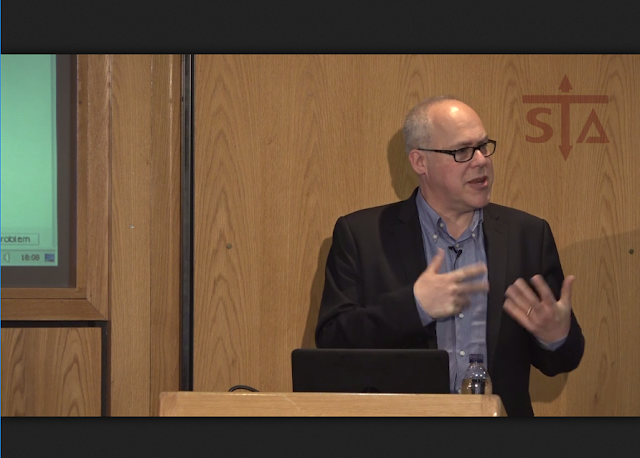
A few weeks ago I gave a presentation to the STA (Society of Technical Analysts) talking about Trader Risk Personality, how we assess this using the 'Risk Type Compass' tool, and how 'Risk Personality' ultimately affects Trader Performance. 

Please click the rather unflattering image of me below, or the link below that to view this webinar. 


https://www.drivehq.com/file/DFPublishFile.aspx/FileID3299372240/Keyxlit40carjtw/STABBA120416.mp4


https://www.drivehq.com/file/DFPublishFile.aspx/FileID3299372240/Keyxlit40carjtw/STABBA120416.mp4

This link is only available for a limited time, as it usually part of a subscription paid sight. 

_____________________________________________________________________________
ADVERT


Click on the above advert to find out more about the exceptional Alpha R Cubed 'Behavioural Performance Coaching Programme'. This powerful programme is  used by many leading Hedge Funds and Investment Banks to help develop and improve their peoples risk taking capabilities. Alternatively email info@alpharcubed.com.
_____________________________________________________________________________


Beyond the Hype: The 10 Behavioural Traits of Highly Successful Traders.

Click here to view
_____________________________________________________________________________

Steven Goldstein is a leading Performance and Executive Coach working with Traders, Banks, Energy Firms and Hedge funds: He is Managing Director of at Alpha R Cubed, which works with banks and investment firms to improve their human capital within financial risk businesses. To know more about Alpha R Cubed, visit their website www.alpharcubed.com or email Steven at steven.goldstein@alpharcubed.com.

Follow Steven on Twitter and Linkedin

Join the flourishing LinkedIn group Trader, Trading & Risk Psychology


  Sign-up for the 'Behavioural Trading' Newsletter.


* indicates required


    Email Format


Thursday, 17 March 2016

What is Trading 'Risk Type'? Why is it getting so much attention?


With the arrival of the Senior Managers Regime, and other conduct risk regulations due to start soon, the use of objective scientific tools and methods for understanding the nature of the people within trading roles is starting to get a lot of attention. The 'Risk Type Compass' is one such tool. In this article co-authored by Geoff Trickey, Managing Director at Psychological Consultancy Ltd (PCL), and Steven Goldstein, Trader Performance Consultant at Alpha R Cubed, they look at risk type, why is it so valuable and how companies are using this concept to help them build a stronger risk culture, and improve business performance.

In trading, as in everyday life, it is implicitly recognized that people vary considerably in their risk-taking behaviour. Yet, surprisingly, personality has often been overlooked as a critical force on risk behaviour. So what do we mean by personality 'Risk Type' and why can it be so empowering in helping to improve your trading performance? 
Let’s first draw on a powerful analogy. Consider a boat on the sea with its anchor down. The boat moves around on the surface as it gets pushed, pulled and buffeted by the tides, wind, and waves. However, there is a defined point around which these movements are constrained. This analogy parallels the relationship between Risk Type and Behaviour. Risk Type, like the anchor, has a persistent and continuous influence. In effect, a person's Risk Type establishes a consistent bias that influences all risk-related decisions.
 The mistake in the past has been to think of risk-taking behaviour as something that falls somewhere on a scale between risk aversion and gung-ho recklessness. In fact, risk-taking relates to many different aspects of personality such as distractibility, impulsiveness, pessimism, uncertainty, over confidence, inflexibility, fearlessness, or a tendency to overreact or be unresponsive. These and many other risk-related characteristics from the personality domain have been factor analysed and regrouped to build the Risk Type Compass.

The Risk Type Compass
The 'Risk Type Compass' helps people to gain deeper insights into their risk personality and how it impacts their decision-making in high-risk situations.

One pole on the Compass defines a personality disposition that is extremely alert to risk and emotionally aroused to action by it. If you are predisposed this way you are likely to be anxious, apprehensive, and fundamentally pessimistic so that anything unfamiliar or ambiguous will be perceived as a threat until proven otherwise. Your reaction to risk is visceral, strong, passionate, and expressed physically as high arousal and avoidance, more tuned for flight than for fight.

If you fall at the other pole of this first scale you would have opposite characteristics: an unusually high threshold for perceiving risk, an unemotional response to it, and a greater readiness to take risks. Your optimism leads to anticipation of positive outcomes, new possibilities, and opportunities. Consequently, you may be the last to appreciate the danger. Disappointments, upsets, or failures arouse little emotion, no regrets, disparagement, or remorse. Your willingness to take it down to the wire before bailing out will open doors to opportunities that would otherwise have been missed.

The second of the two bi-polar scales is concerned broadly with restraint at one end and impulsivity at the other.

The first pole is characterized by the need to understand, to make sense of things, and to prepare appropriate and suitable actions, carefully and in detail. If you are predisposed this way you will be reluctant to do anything until you see good reason to do so and unless you have a clear and well-prepared plan of action. You are likely to be conservative, conventional and respectful of tradition and would ideally organize risk out of the equation.

The opposite pole of this second scale is concerned with excitement seeking and impulsivity. If you score at this extreme you will be easily bored, preferring the new to the familiar and the unconventional to the traditional. Because you enjoy and embrace uncertainty you are more comfortable about doing things ‘on the fly’ than planning events carefully or in plenty of time. Restless and easily bored you seek action, welcome change, and may be frustrated by traditions and conventions that stand in your way.

The Risk Type Compass places people into one of eight different Risk Types based on their scores on these two underlying scales.

Risk Behaviour Change Requires an Understanding of Risk Type
From a trading perspective, understanding your Risk Type helps you make sense of the positive and negative behaviours you display in your trading activities. For example, individuals identified as extreme ‘Wary’ types tend to be highly risk-averse. They are usually very detailed orientated and highly analytical, and are therefore more likely to succeed taking a tactical approach to trading. On the other-hand, Wary types may display high levels of anxiety and find ambiguity challenging.
Diametrically opposed to the Wary type is the 'Adventurous’ type. These individuals have a high-risk tolerance and are more likely to succeed adopting a strategic perspective. They are comfortable holding risk without becoming too flustered. However, they lack detail orientation and can get caught out being over-confident and under-appreciating the level of risk they take.

What matters for success is not which Risk Type you are, but whether you apply yourself in the correct way for your Type. The most profitable trader assessed by Alpha R Cubed so far was an extreme version of the Wary type. This individual was from a large and very successful hedge fund. He was very anxious and nervous when trading yet he produced profits well in excess of $100 million over each of the past two years. His method, which is purely discretionary, plays very much to the strengths of his Wary characteristics.

Applications in Financial Markets.
Alpha R Cubed have carried out extensive research with traders and risk professionals from banks and hedge funds. This research is proving hugely revealing at identifying the most appropriate risk type characteristics for certain types of trading. Distinct differences are showing up in the risk-type characteristics of market-makers, directional and short-term proprietary traders, relative value portfolio managers, options traders, people in execution roles. This sort of insight is dynamite for firms looking to select the right people for certain roles. Typically, trading firms hire quite arbitrarily, selecting candidates based on what they believe is the right sort of make-up for a generic trading role. As an analogy, this is akin to choosing a generic ideal of how an athlete should be, rather than looking at the specific body types for the various types of athletic disciplines.

As an example consider the role of an execution trader at a large macro hedge fund. In many funds, the portfolio managers are often (though not always), slower and more considered in their approach to execution. This can lead to some clumsiness in placing large orders and leads to high slippage costs. Thus large funds will often have their own execution desk who specialise in transacting orders. Their skill in doing so can reduce slippage costs and make it more likely to successfully execute and exit large positions, particularly when it comes to relative value trading. Our analysis has found that the ideal risk type for an execution trader is very different to that of a typical relative value trader. One hedge fund has suggested that the difference in performance of having the appropriate type for an execution role may be worth around $20 to $25 million per year to them alone in slippage reduction.

Likewise, the knowledge of risk types can impact how successfully firms train and develop their people. Much of the training in banks and trading firms occurs by placing a novice trader with more senior traders. However, if for example the novice trader is the composed type, and the experienced trader is the intense type, then this is likely to lead to sub-optimal learning experience for the novice. Again as an analogy, it would be like a sprinter mentoring a long distance runner. They will be learning a trading style completely inappropriate for them. This can be a highly demotivating experience, and leads to a waste of talent. In our work we have come across traders who have been in a role for 10 years or more, but are using a style ill-suited to their needs. Often when we help them realise that there is an approach more suited to them, and we coach them to adjust to a new style, their performance can soar. Our article featured here, highlights some examples of Alpha R Cubed’s work in this area.


The tool also has extensive application in the area of ‘conduct risk’ which is a red hot topic right now. In the UK, the ‘Senior Managers Regime’ has recently come into force. This regulation is grabbing the attention of bank’s senior managers who are now personally accountable and liable for ‘conduct risk’ failings in their areas of responsibility within their firms. Under this regulations, senior managers could face criminal prosecution and personal financial liability, even if the failings occur after they leave the firm for up to 6 years after their departure. Thus suddenly the importance of having the most appropriate people, in the right roles, is not surprisingly getting their attention.

The Risk Type Compass also has many applications beyond improving trader and investment manager performance. It is increasingly being applied to help improve team, leadership, and management performance, as well as to support cultural initiatives and change projects in banks and investment firms. The tool is also being used with boards and strategic decision-makers by consultants and coaches, as well as in the world of high-performance sport.

Risk Type as a driver of Risk Behaviour.
While various factors influence our behaviour, they are intermittent and will vary. We have goals and aspirations, as well as free will in dealing with an infinite variety of situations, but our risk-taking is anchored by personality dispositions that underpin our unique personal preferences and limits. Understanding your Risk Type helps you to maximize your strengths in your trading strategies rather than working against the tide of your natural risk disposition.

AlphaMind podcast #107 A US Navy Seal Commander, A Mindfulness Expert, and Self-Compassion

In the brutal world of trading and markets, we can often turn in on ourselves, and end up becoming our biggest problem. The ability to stay ...